Educator Workshop at Heart Mountain in Wyoming
This summer, Needham High School Social Studies teacher, Laura Magno, attended the National Endowment for the Humanities’ (NEH): Heart Mountain Educator Workshop in Wyoming. More than 14,000 Japanese Americans were confined at Heart Mountain during World War II. The week-long workshop included visits to the nationally recognized interpretive center at Heart Mountain, as well as the Smithsonian-affiliate museum, the Buffalo Bill Center of the West, and the Homesteader Museum. The experience will enhance teachers’ understanding and provide resources and lessons for the Needham High Social Studies Department.
Student Ambassador Program
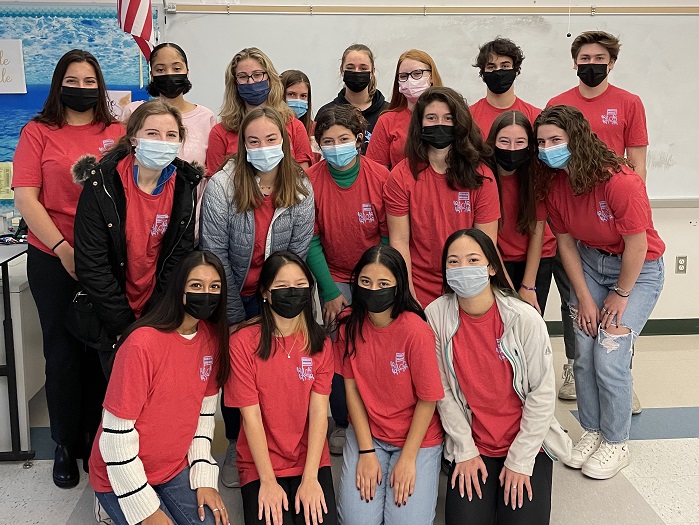
Needham High School Assistant Principal, Mary Kay Alessi, received funding in the Winter 2021 grant cycle to create and implement a student Ambassador program designed to support students who are transitioning into Needham High School. Upperclass students were trained as Student Ambassadors to facilitate community building while providing support for some of the social emotional needs of students transitioning into NHS, including both 9th graders and new-to-Needham upperclass students. The program builds on the traditional elements of the 8th-9th grade transition while extending the outreach to new students, incorporating more robust activities in the transition process and deepening the connections between current and incoming students.
During the multiple orientation days in August, Student Ambassadors provided building tours. On the first day of school, they fanned out into 9th grade and new-to-Needham homerooms and provided additional tours and held informative question and answer sessions for students. This opening day of school also was the start of the ‘No one eats alone’ initiative where Ambassadors invited students to join them in the cafeteria during each of the lunch blocks if they didn’t have friends to sit with. The Ambassadors provided this lunch support for about 2 weeks as students began to find a rhythm and become more comfortable with NHS expectations.
The Ambassadors were quick to offer support and work one-on-one with students who joined NHS after the school year started, as they were learning their way around such a big building. Student Ambassadors stayed assigned to homerooms for the first 4 X-blocks, where it allowed the Ambassadors to share relevant information with students to help with the transition to high school or to NHS specifically. The work was broken into 4 modules: SEL, Getting Help and Getting Involved, Getting Organized I, and Getting Organized II. This was also helpful for teachers as it removed a responsibility for them and gave them a nice place to start building their student relationships.
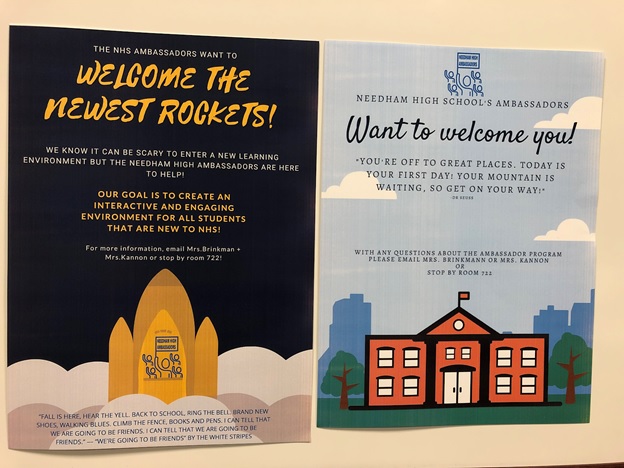
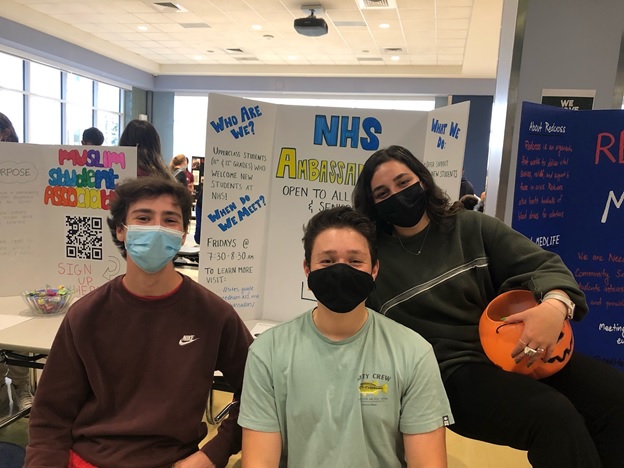
Additionally, the team created a ‘booth’ for NHS Oracle which is an opportunity for all club and activity groups to show who they are and recruit new members. The Ambassador advisors and leaders have created a website that includes their initiatives and resources to support students joining NHS. Parents were also directed to the website adding another potential support for students transitioning to NHS. Finally, Ambassadors created posters that were distributed throughout the building to advertise their mission and let students know where to find information.
NEF is proud to have funded the Student Ambassador program because it provides opportunities for students to make connections and improve the school culture. In addition, it provided the Student Ambassadors opportunities to practice leadership and organization skills, planning and creativity, and collaboration.
Navigation Games for Interdisciplinary Learning
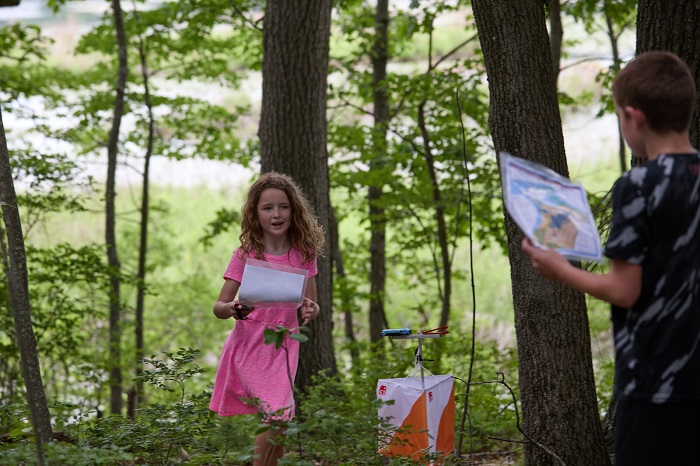
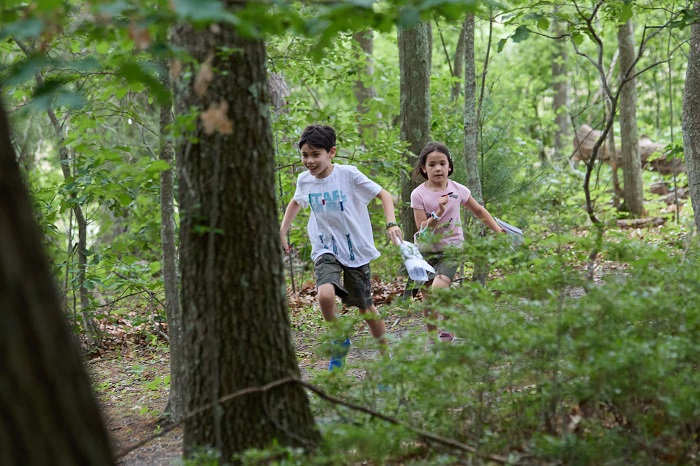
A winter 2021 grant was awarded to Physical Education and Wellness Teacher Rob Tatro to bring orienteering to the K-5 curriculum at Sunita Williams Elementary School. Orienteering has many benefits in physical education: developing locomotor skills, physical fitness, responsible behavior, social interactions, and an understanding of the value of life-long outdoor recreation.
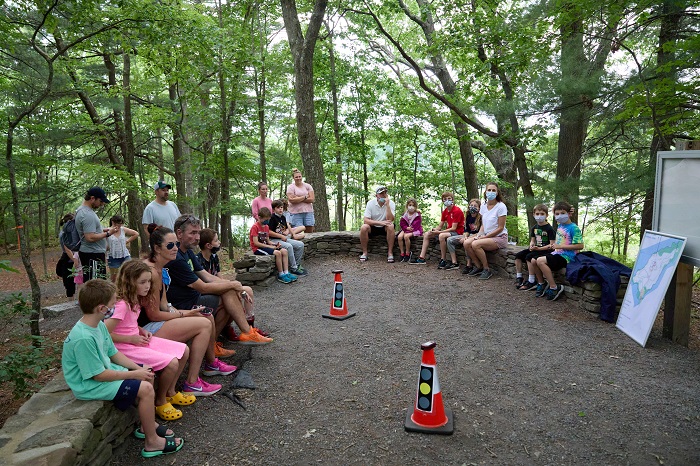
This large grant funded the purchase of equipment and training materials, the development of lesson plans, and the support of an on-site trainer from Navigation Games, a non-profit organization based in Cambridge who develops, shares and delivers navigation education for children.
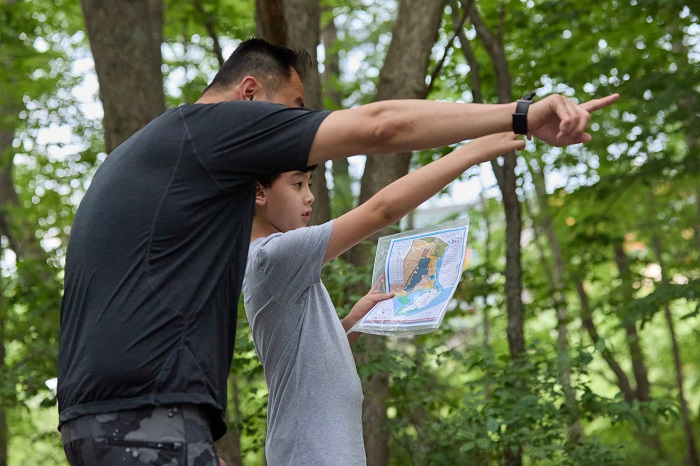
In orienteering, students use a map and a compass to find a series of checkpoints. There is no marked path, so they must choose their own routes from one checkpoint to the next. These navigation skills offer students a stimulating outdoor learning experience while empowering learners to discover and integrate content from multiple disciplines, engage in self-directed learning, and use technology to support learning to navigate in a digital world.
According to Mr. Tatro, “Students absolutely loved orienteering and learned so much.” The PE staff at Sunita Williams had a great time too. While they were having fun, they were thinking about ways to integrate many of the activities that they did into their existing physical education curriculum.
Going forward, Rob will find opportunities to collaborate with teachers in other subjects (math, social studies, STEAM, etc) to develop lesson plans around things like map-making, scale, distance estimation, time/distance relationships, spatial reasoning, problem solving, and teamwork.
This program is a pilot for a long-lasting curriculum that can be shared with the other elementary schools with a minimal investment in equipment and training. NEF is proud and excited to have supported this innovation in education for Needham Public School students.
“Playful Learning” in Mitchell’s Math Centers
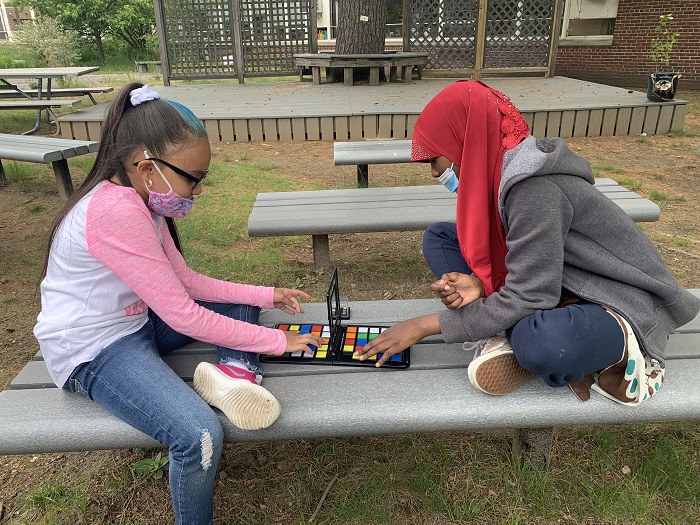
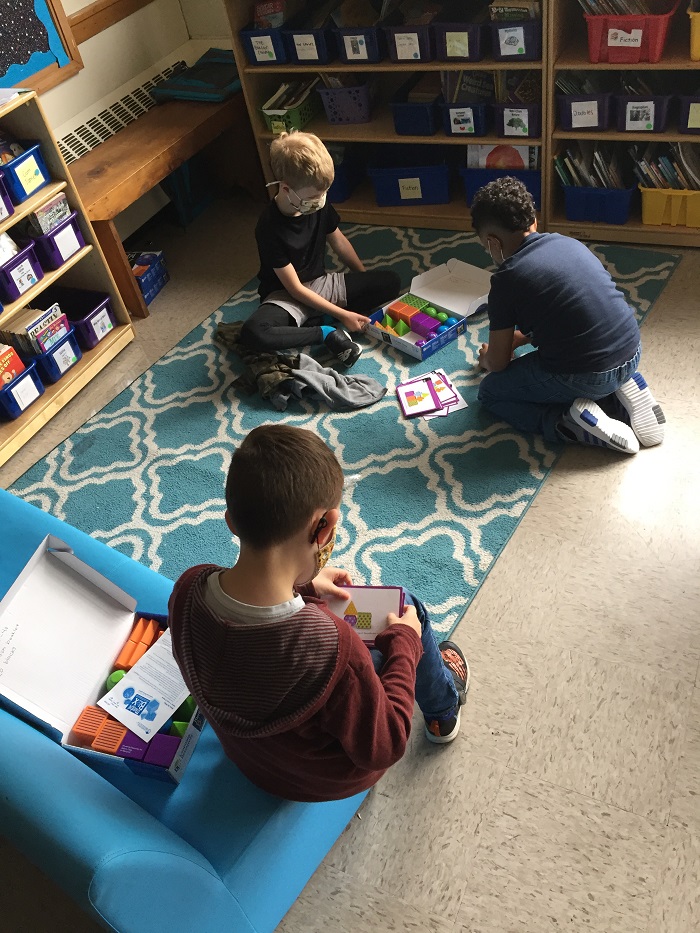
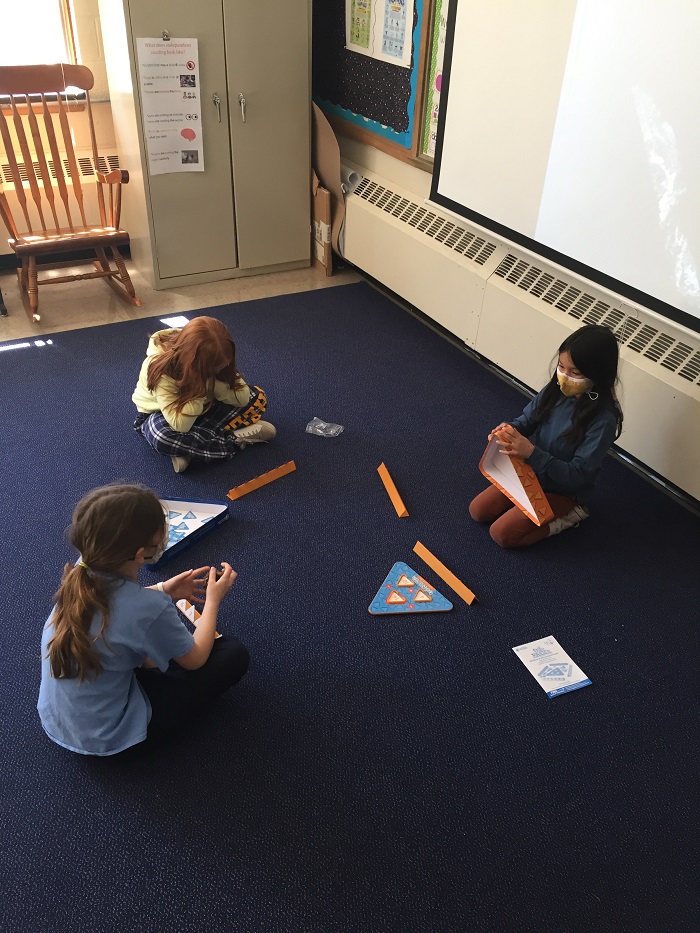
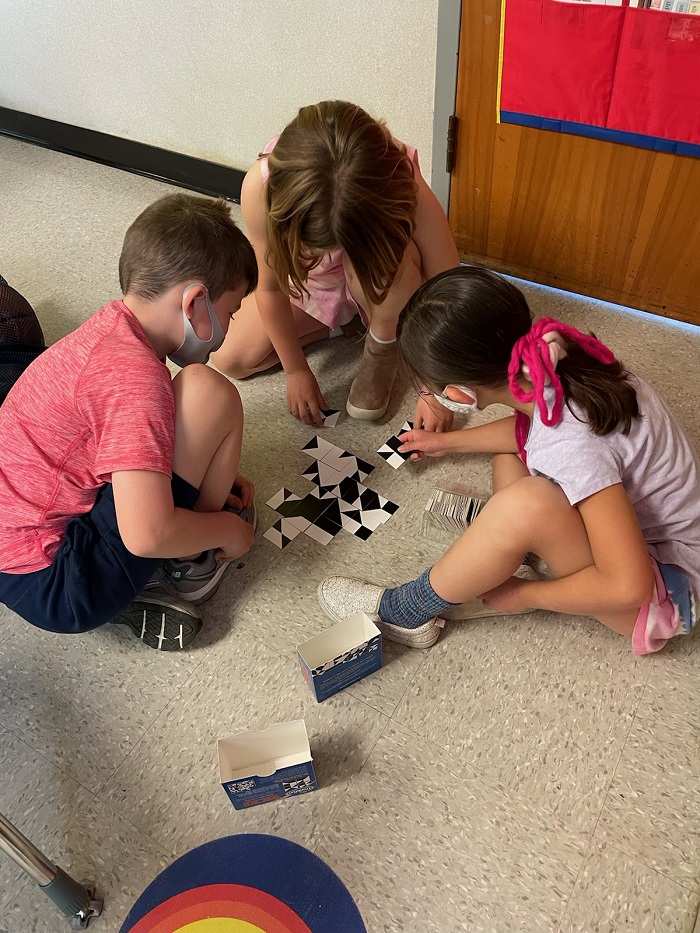
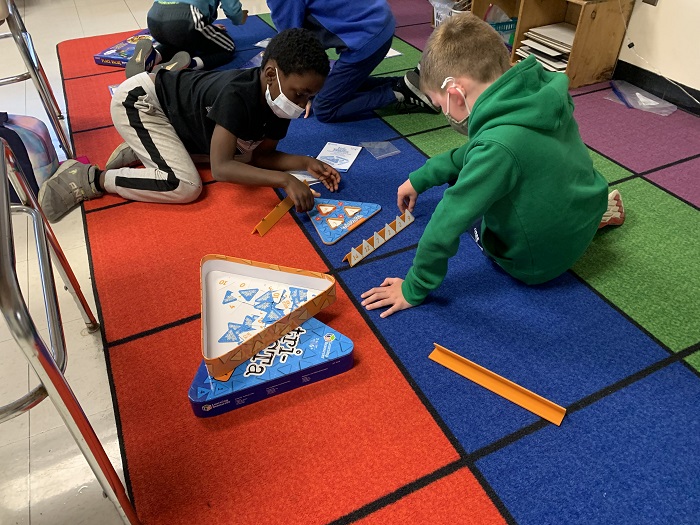
Mitchell Elementary School Math Coach, Anjali Petersen, received funding for her grant entitled “Playful Learning: Enhancing Computational Thinking & Spatial Reasoning for All Learners through Mathematical Games.” The winter 2020 grant funded the purchase of visually-based math puzzles and games that can be used independently and within small groups across a wide range of learners in Grades 1-5.
Game-based visual learning “activates the brain’s spatial-temporal reasoning skills and leads to a deeper understanding of concepts for all students,” explained Petersen. Importantly, this includes English Language Learners and other high-needs learners.
The games covered a variety of content including patterns, geometry, place value, and logical problem-solving. They also provided students with opportunities to work on the math practice standards.
Teacher Lynn Gotwals reported that “The math games gave the students an opportunity to use their skills in a different way. The blocks tested their ability to use spatial reasoning to solve a puzzle and were a favorite game.”
Both students and teachers enjoyed including these games into their math routines.
The roll out of the games was delayed due to Covid, but once in-person learning resumed full-time, the second grade teachers, in particular, quickly embraced the games. Each class had one or two games in their classroom for at least two weeks each.
“They had a lot of success in using the materials during their math workshops,” said Petersen.
“The math games were a great addition to math centers this year. It took 1-5 minutes to explain each game and then the students were able to play on their own. The games were all very different and kept students engaged.”
—Math Teacher, Gabriella Gonzelez
Needham Young STARs
This past summer, the NEF funded the Needham Young STARs (Science Technology and Arts Researchers) program organized by Needham High School students Kate Paik and Derek Yang.
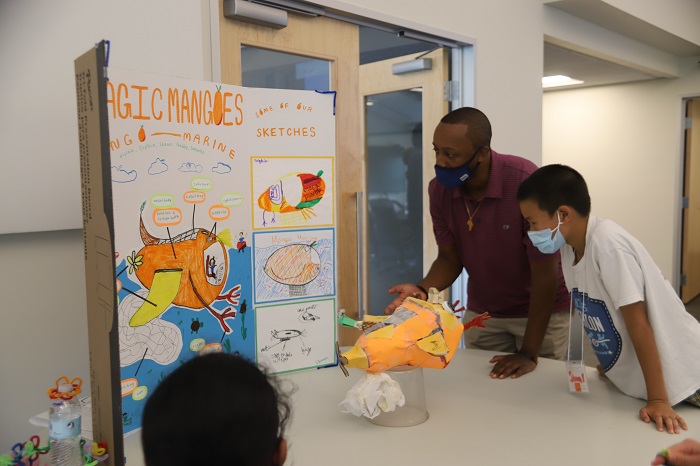
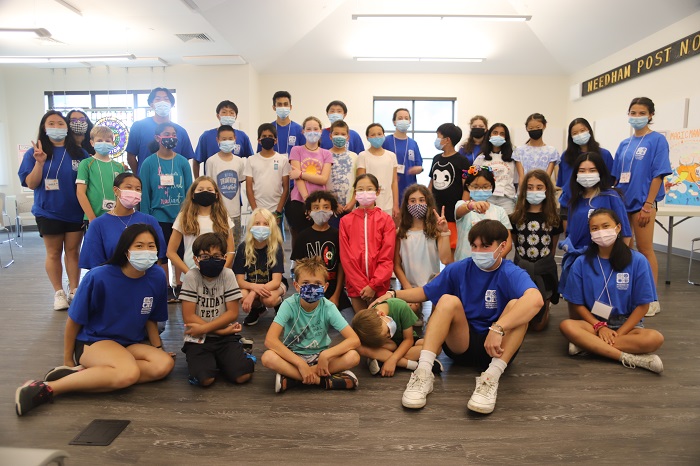
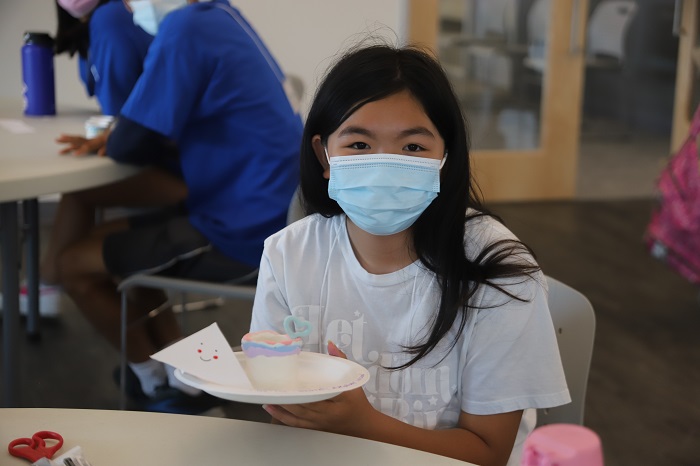
The free, open-to-all, four-day STEM workshop for 4th through 6th graders was designed to cultivate more interest in STEM in the Needham community. The program drew 30 participants and over 15 volunteers. Needham Park and Recreation hosted the event at Memorial Park.
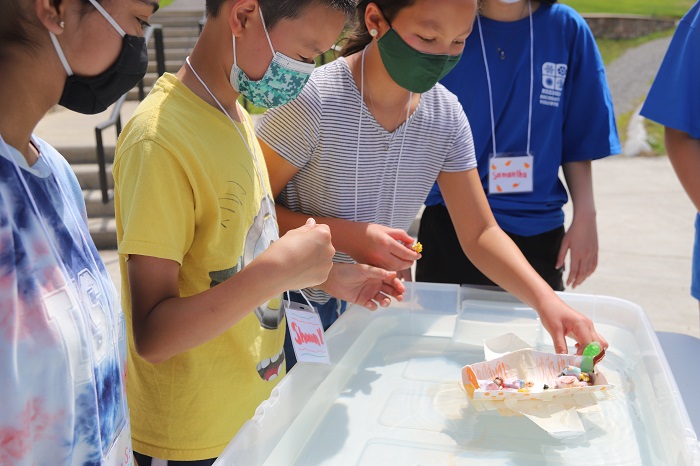
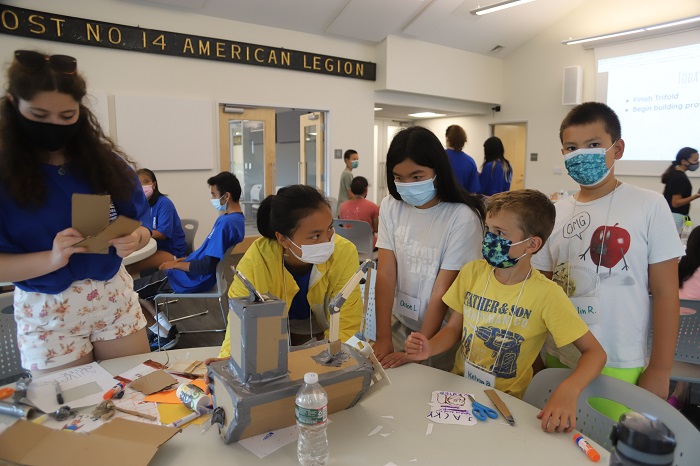
Students worked on various team-based engineering challenges and explored chemical reactions through rockets and volcanoes. Throughout the week, groups of students worked on a final project that focused on The Great Pacific Garbage Patch.
At the end of the program, parents were invited to a mock science symposium to view the students’ projects. Town Select Board member Marcus Nelson also stopped by to see the projects and acknowledge the hard work everyone put into the program.
Grant writers, Kate Paik and Derek Yang explained the motivation to create this program: “Growing up we have both attended many similar STEM-focused summer camps which have inspired us to pursue careers in the sciences.” They wanted to “give back to our community and share our love for STEM with the next generation of engineers, mathematicians, and scientists.” It was important to them that the program be free to participants “to promote a more open and equitable introduction to STEM for young scientists.” The NEF was proud to support this enriching program for Needham Public School students with a special interest in STEM.
“Your Voice Matters. What’s Your Story?”
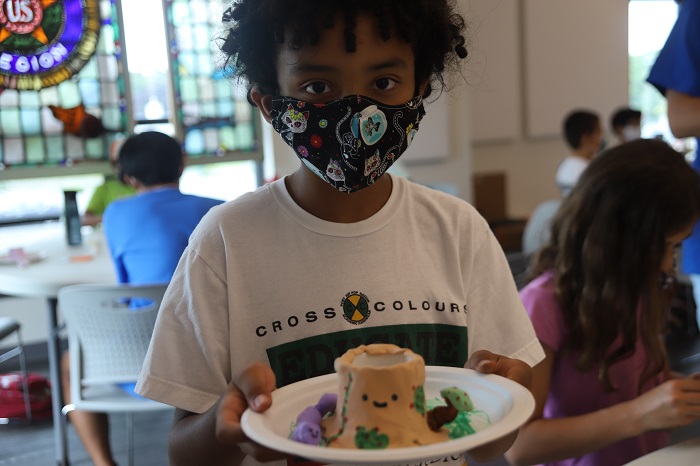
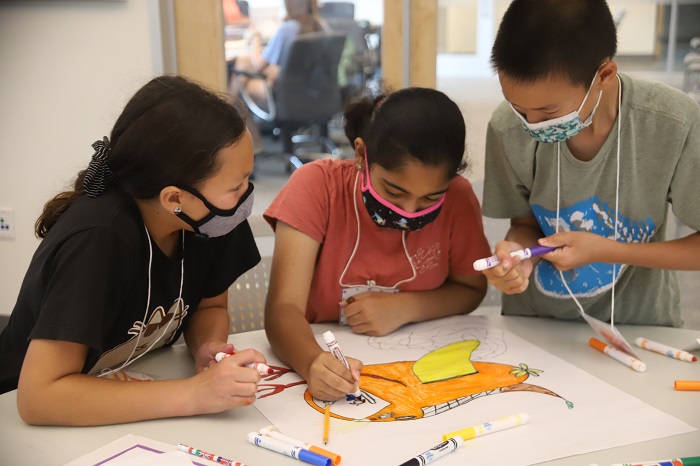
Funded by a large grant from the NEF, ‘Your Voice Matters. What’s Your Story?’ is a multifaceted project that creates a platform for the Needham High School community to share their stories and connect with one another, while also creating spaces for students to think critically and empathically. The authors of the grant, Kate Bergeron, Robyn Briggs, and Nicole Burnor, worked closely with Maria Sartori and other members of the FPA department to make this project come alive.
The project involves the creation of a professional gallery space at the high school which will have rotating exhibitions of student artwork based around various themes. The first exhibition is to be a Fine & Performing Arts (FPA) Department curated art show, ‘Your Voice Matters, What’s Your Story?’ centered around the theme of empathy as it relates to equity.
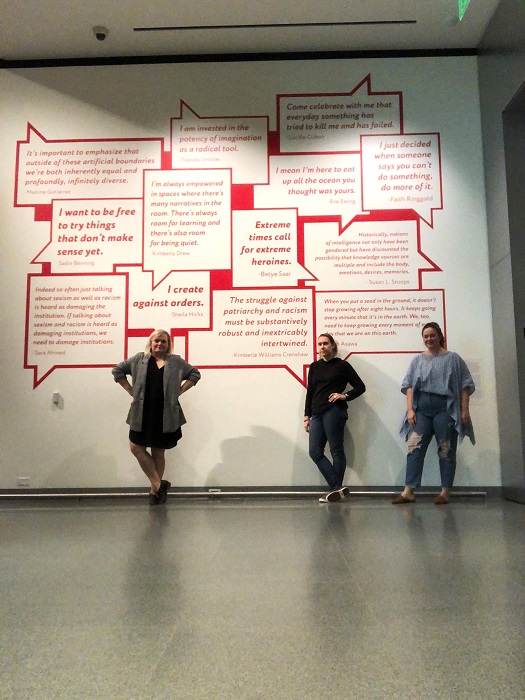
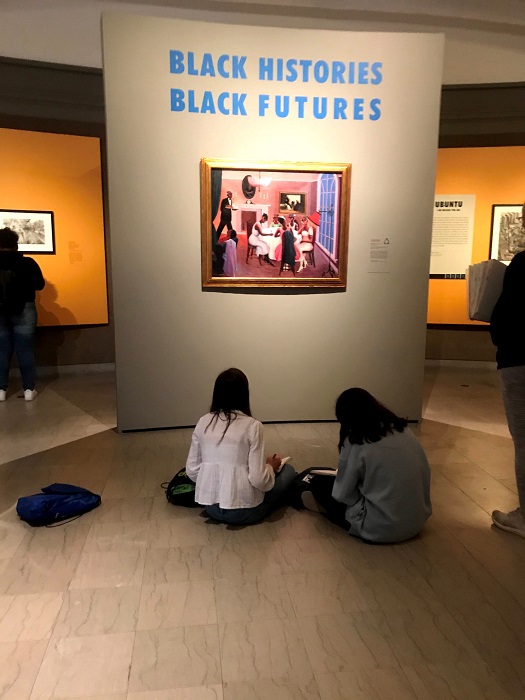
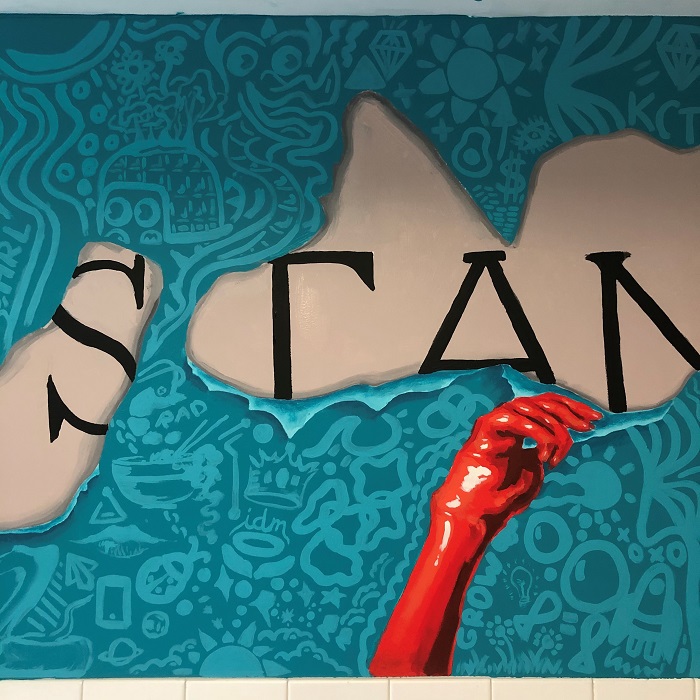
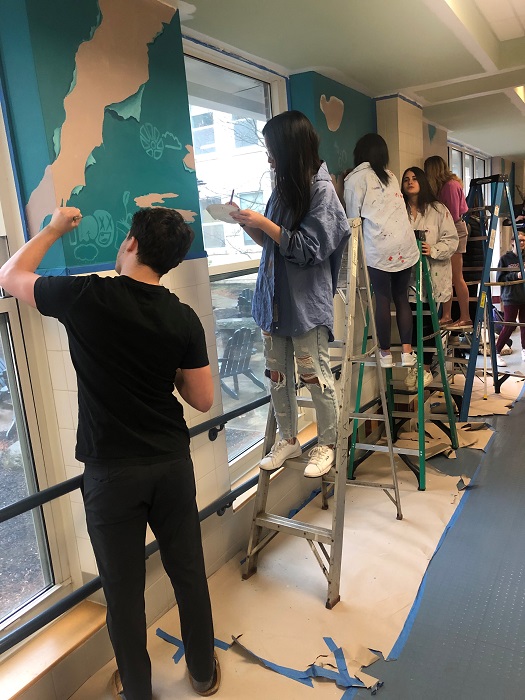
While this inaugural exhibition was unable to take place in April as planned, many other components of the project have been accomplished and the work continues. According to the grant writers, before the abrupt COVID interruption last spring, they collaborated with a Boston-based community project duo, The Cauldron, who hosted a workshop on the high school’s One Day and taught a Master Class with the Senior Studios students. They also organized a FPA Department field trip to the Museum of Fine Arts to see the exhibition, Women Take the Floor. In addition, Senior Studios students collaborated to design and work on a permanent mural installation at Needham High School.
The grant writers also began, before the schools shut down, to order supplies for the new gallery space for visual and digital arts, Gallery 450’s, to be created in the new wing of the high school. These include items such as hanging supplies and display cases as well as a TV to exhibit digital art. They now continue to work on ordering supplies for the new gallery space.
And there are more benefits to come from this innovative program. As Nicole Burnor put it, “We are also looking forward to collaborating with Own Your Peace and to continue creating spaces for our students to build community and foster the value of diversity.”
Sensory Pathways at Eliot and Mitchell
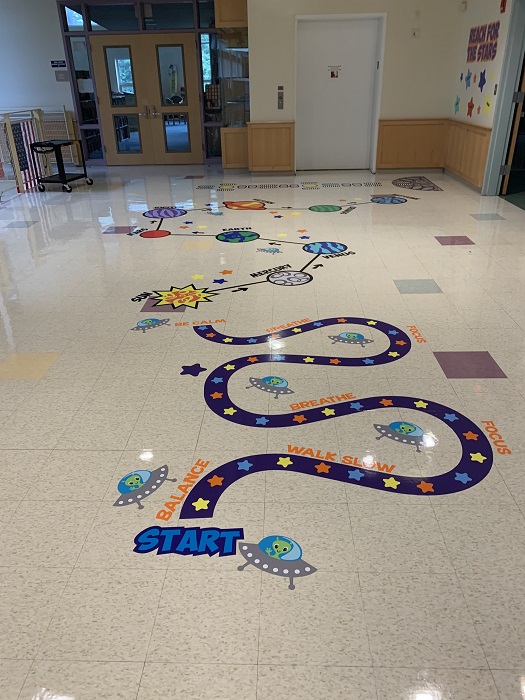
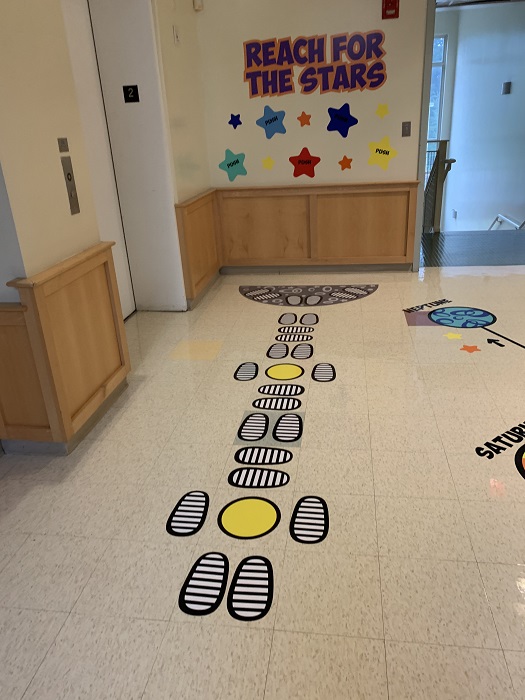
This past year, the NEF funded Sensory Pathways to be installed at Eliot and Mitchell over the summer. The Sensory Pathways are for students to use when they need a movement or therapeutic break. The Eliot and Mitchell grants were funded through NEF’s “Express Grants” option, which facilitates the replication of successfully implemented small grant programs from one school to another school. The first Sensory Pathways were funded and installed at Broadmeadow last year. They immediately made a huge impact on the students and teachers by giving students opportunities to release their energy and sensory build-ups that impact their ability to succeed in the classroom. (See them in action here!)
Children can jump, bounce, and bend their way through the colorful, playful pathway decals in the hallways as they transition from one class to another or when they require a movement or therapeutic break. Importantly, all children can benefit academically, physically, and emotionally from the release of energy and sensory build-up, regardless of whether they are a general education student or have specific attentional, sensory, or mental health needs.
At Eliot, one pathway is located in a high traffic area and the second pathway is located in a quieter wing upstairs. At Mitchell, one pathway was installed in the kindergarten modular building and the second pathway in the grades 1-2 wing.
The photos below show what greeted Eliot students when they returned to school in-person this week, ready to move their bodies and put the pathways to good use.
Cornell’s Diversity and Inclusion Certificate Program
Seema Meloni, one of the NEF’s co-presidents, recently spoke with Christopher Dancy, 6th grade science teacher at High Rock School, about his experience completing Cornell’s Diversity and Inclusion Certificate Program – professional development funded through an NEF grant. Here are some of the highlights from their conversation:
Q: For those unfamiliar with Cornell’s Diversity and Inclusion Certificate Program, could you please briefly explain the goals of the program and why you felt so compelled to enroll in the courses?
A: This certificate program represents a proactive response in addressing some of the inequities and tensions around xenophobia, homophobia, and racism that have been identified within NPS. While there has been a strong administrative response to these problems, NPS needs staff who have DEI (Diversity, Equity, and Inclusion) expertise grounded in best practices and not solely personal experience. While Cornell’s D&I program in itself is not a solution to these problems, the completion of this certificate program represents a great first step in gaining expertise in a field that is so necessary to the health of Needham Public Schools. I’m thrilled to have completed it and am proud to identify myself as a professional who is skilled in the pedagogy of the DEI space.
Q: How does DEI work best?
A: I am proud to have partnered with the NEF in order to further conversations regarding equity within the district. In the public schools, DEI work is implemented with the youngest of minds in moments of the day which are not publicized, visible, or recorded. DEI work happens in private and small group conversations, teachable moments, and as direct responses to student questions. DEI work is most successful when there is mutual trust, mutual respect, and engagement in the process. The true value of this grant is not based on quantitative outcomes, but instead its value is a lasting investment in the culture of the classroom and the larger school community. For that, I am deeply grateful.
Q: How can we address current events through a DEI lens?
A: What’s particularly interesting about the completion and implementation of this grant, is the timing. The first six months of 2020 have proven to be historically unprecedented. During this time the world has been gripped by pandemic, remote teaching and learning over Zoom has become a reality, while our fellow Americans protest as a response to racism and the murder of George Floyd.
Still, as teachers, we’ve continued to teach daily in this new remote paradigm.
Through a DEI lens, the themes of equity, access, healthcare, employment, family dynamics, as well as school-based support structures for our most fragile students (ELL, Needham students of color, LGBTIAQ+) have all been highlighted during this time in the most personal and profound of ways.
While I have always engaged headfirst into conversations associated with the DEI space, I left Cornell’s Diversity and Inclusion program with a more honed set of skills, especially in the areas of engagement and inclusion. For some of my students, there was rage and fear as they grasped for understanding about the reasons why George Floyd was murdered. For others, there were questions about why neighbors, classmates, and the public were supporting BLM in the streets. For a few, we engaged in developmentally appropriate conversations regarding how their own opinions and beliefs were contrary to an inclusive culture.
Q: Now that you have completed this Certificate Program, what’s next?
A: As we look ahead towards the last half of 2020, our tasks ahead do not look any easier. A few of our considerations are: DESE’s recommendations for schools reopening in the fall, surging cases of COVID-19 across the country, continued BLM protests in response to police brutality, and what will prove to be a very divisive Presidential election. This year, more than ever, we will need DEI-trained teachers in order to develop culturally responsive classrooms. I am up to the challenge and am grateful for the opportunity to be a more effective partner in service of our students.
Cooking with Kids
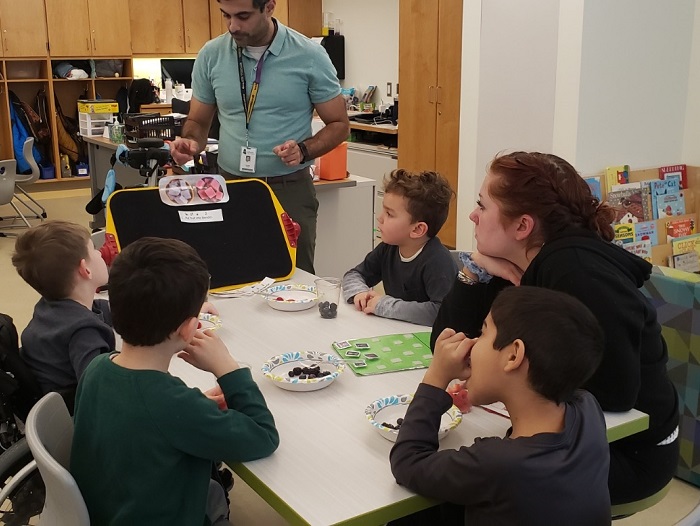
Cooking With Kids was approved during the Fall 2019 Grant Cycle to fund the purchase of ingredients for a weekly cooking activity. The goal was for students to learn life skills in early learning classrooms. The cooking activity provided opportunities for various service providers to collaborate, and serves as a chance for reverse inclusion in which ELC general education peers can help with the activity and provide appropriate peer modeling.
While the current school year didn’t unfold as expected, we are thrilled to see that the weekly cooking activity for Sunita Williams ELC students has continued virtually! Each week, a cooking project provides an opportunity for students to work on a range of skills while continuing to stay connected.
Making Space
This Fall 2018 grant funded a collaborative, school-wide art installation that visibly and functionally represents the mission to promote equity within Needham High School. The creation and installation of this structure will allow students and staff to explore important topics and have challenging conversations about race, gender, religion, sexual orientation, language, socioeconomic strata, immigration status, etc.
The NEF is very proud to have funded this grant at Needham High School to help students and staff continue their work on equity and inclusion.